Every Incline Village listing says it somewhere. "IVGID privileges." "IVGID recreation pass eligible." The phrase reads like a single amenity, the way a listing might say "granite counters" or "two-car garage." It isn't. It's a bundle, and the piece of that bundle buyers care about most, private beach access, is decided by a boundary line drawn on a specific day in 1968. Not by price. Not by the year a home was remodeled. Not by which street it sits on.
Two homes can list within a few thousand dollars of each other this summer, share the same era, the same finishes, the same golf-resident pricing and Diamond Peak access, and still sit on opposite sides of that line. The only way to know which side you're on is to read the parcel's actual fee history, not the listing description.
What the Phrase Actually Bundles
The Incline Village General Improvement District, known locally as IVGID, is a special district under Nevada law that operates four restricted beaches, two golf courses, the Diamond Peak Ski Resort, and the community recreation center. It is not a homeowners association. Its charges show up as line items on the Washoe County property tax bill, not as a separate HOA invoice, and eligibility attaches to the parcel itself rather than to whoever happens to own it in a given year.
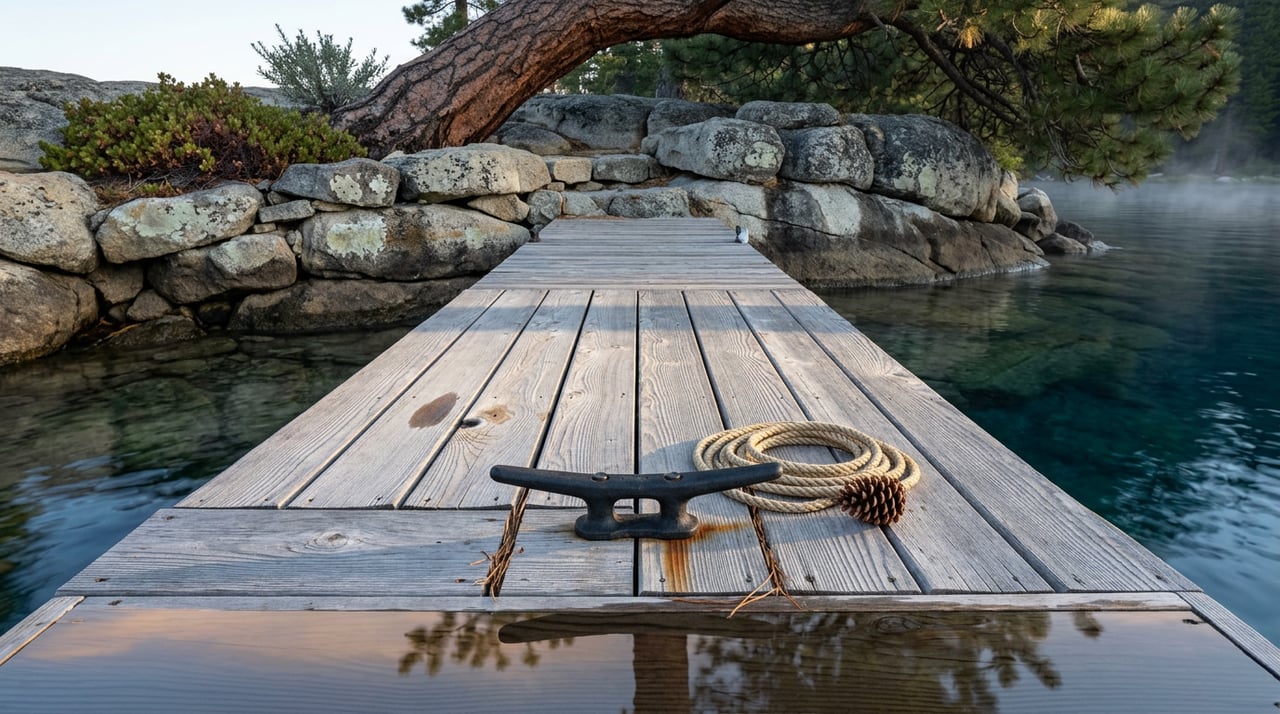
Every eligible parcel receives five recreation cards a year, split between Picture Passes and Punch Cards however the owner chooses. A Picture Pass is a photo credential issued to a named household member. A Punch Card is a transferable scan card loaded with dollar value, useful for guests, renters, or family who visit without a pass of their own. Both unlock resident-rate golf, ski, and recreation center access. Only one of them, when the parcel qualifies, also unlocks the four restricted beaches: Ski Beach, Incline Beach, Hermit Beach, and Burnt Cedar Beach and Pool.
That last clause, "when the parcel qualifies," is where the listing language stops being useful.
The Date That Actually Decides Beach Access
IVGID's own Ordinance No. 7 sets the rule in plain terms:
Only Parcels which were located within the District as of June 4, 1968, and which are assessed by the District and have paid and continue to pay a Recreation Fee which includes a Beach Facility Fee, are eligible to receive an IVGID Recreation Pass or Recreation Punch Card with Beach Access.
A parcel either falls inside that 1968 boundary or it doesn't. A remodel doesn't move it. A higher sale price doesn't move it. The only way it changes is if the district itself amends the ordinance, which is a public policy decision, not something a buyer or seller negotiates at closing.
This is why two nearly identical homes can carry different real privileges. Picture a pair of updated three-bedroom homes listed within $50,000 of each other this season, similar lot size, similar walk to the same trailhead. One sits on a parcel that has paid a Beach Facility Fee for decades. The other, annexed into the district later, pays the Recreation Facility Fee and nothing more. Both listings might use the identical phrase, "IVGID privileges," because both statements are technically true. Only one comes with a card that opens the gate at Burnt Cedar.
What That Difference Costs, in Dollars
For the district's 2026-27 fiscal year, the fee schedule breaks down like this:
| Parcel type (2026-27) | Recreation Facility Fee | Beach Facility Fee | Combined annual fee | Punch Card value (each of 5) |
|---|---|---|---|---|
| Beach-access parcel | $1,385 | $145 | $1,530 | $173 |
| Non-beach parcel | $1,385 | $0 | $1,385 | $157 |
The annual dollar gap is modest, $145. What the gap actually represents is not the fee itself but what the fee buys: entry to a private shoreline that has no public substitute inside the district and no mechanism to purchase after the fact. A non-beach parcel can pay every dollar of the Recreation Facility Fee for the next fifty years and it still won't produce a beach card, because the fee schedule follows eligibility, not the other way around.
How to Verify Before You Write the Offer
The verification is not complicated, but it has to happen before the offer, not after closing.
- Ask for the parcel's current Washoe County property tax bill and read the IVGID line items directly, not the summary total.
- Confirm whether the bill lists a Beach Facility Fee in addition to the Recreation Facility Fee. If only the Recreation Facility Fee appears, the parcel does not carry beach access under Ordinance 7.
- If the tax bill is ambiguous or the seller can't locate a current copy, call IVGID's Recreation Department directly to confirm the parcel's status before removing contingencies.
- If the property has been rented as a short-term or vacation rental, ask how guest access has historically been handled, since Punch Cards are transferable but the ordinance limits use to recreation purposes only and prohibits selling or renting access itself.
None of this shows up on a portal listing. It shows up on a document that already exists and takes one phone call to confirm.
Why This Particular Summer Adds a Wrinkle
Beach access itself is also mid-transformation this year. IVGID began construction on a nearly $11 million rebuild of the Incline Beach House on May 1, 2026, tearing down the 1970s-era restroom and food service building at Incline Beach and replacing it with an expanded facility. Through the construction period, the beach's main entrance is closed, a temporary entrance handles reduced parking, and IVGID has relocated its "Music on the Beach" concert series and food and beverage service next door to Ski Beach for the 2026 season.
For a buyer weighing a beach-access parcel against a comparable non-beach property this summer, that matters beyond the boundary question. The amenity you're buying into isn't the finished version yet. It's worth knowing that going in, and it's worth asking your agent when the project is expected to wrap rather than assuming this season's layout is permanent.
What the Access Question Is Really Worth in This Market
Incline Village's median sale price reached $1,610,624 as of June 2026, up 26.6% year over year, in a market where inventory has stayed thin enough that well-priced listings still move quickly. In a market moving that fast on that little supply, the beach line functions as a value lever that has nothing to do with square footage or finish level. It's a fixed, non-negotiable attribute tied to a single parcel, in a market where almost everything else about a home, price, condition, even lot size, can be adjusted or improved. Beach eligibility can't be. That's exactly why it's worth confirming before an offer rather than discovering at the title company.
Two Things Buyers Ask After They've Read This Far
Can a non-beach parcel ever gain beach access later? Not through any process available to an individual owner. Eligibility follows the 1968 boundary set in Ordinance 7. Only a district-wide policy change from the IVGID Board of Trustees could alter that, and that would apply district-wide, not to a single parcel by request.
If I rent the property, does my renter get beach access too? A Punch Card is transferable, so a renter holding one can use it at IVGID venues. The ordinance is explicit that access is for recreation purposes only and that an owner cannot sell or receive compensation for beach access itself, so any rental marketing built around beach privileges should reflect what the specific parcel actually carries, not what "IVGID privileges" implies in general.
The line matters most in the moment before you sign, not after. Peg Augustus and Victoria Popescu at Incline Experts verify parcel-level IVGID status as a standard part of due diligence for every Incline Village and Crystal Bay buyer they represent, before an offer goes in rather than after. If you're comparing homes this season and want to know exactly what a specific address carries, reach out to the team to talk through it.